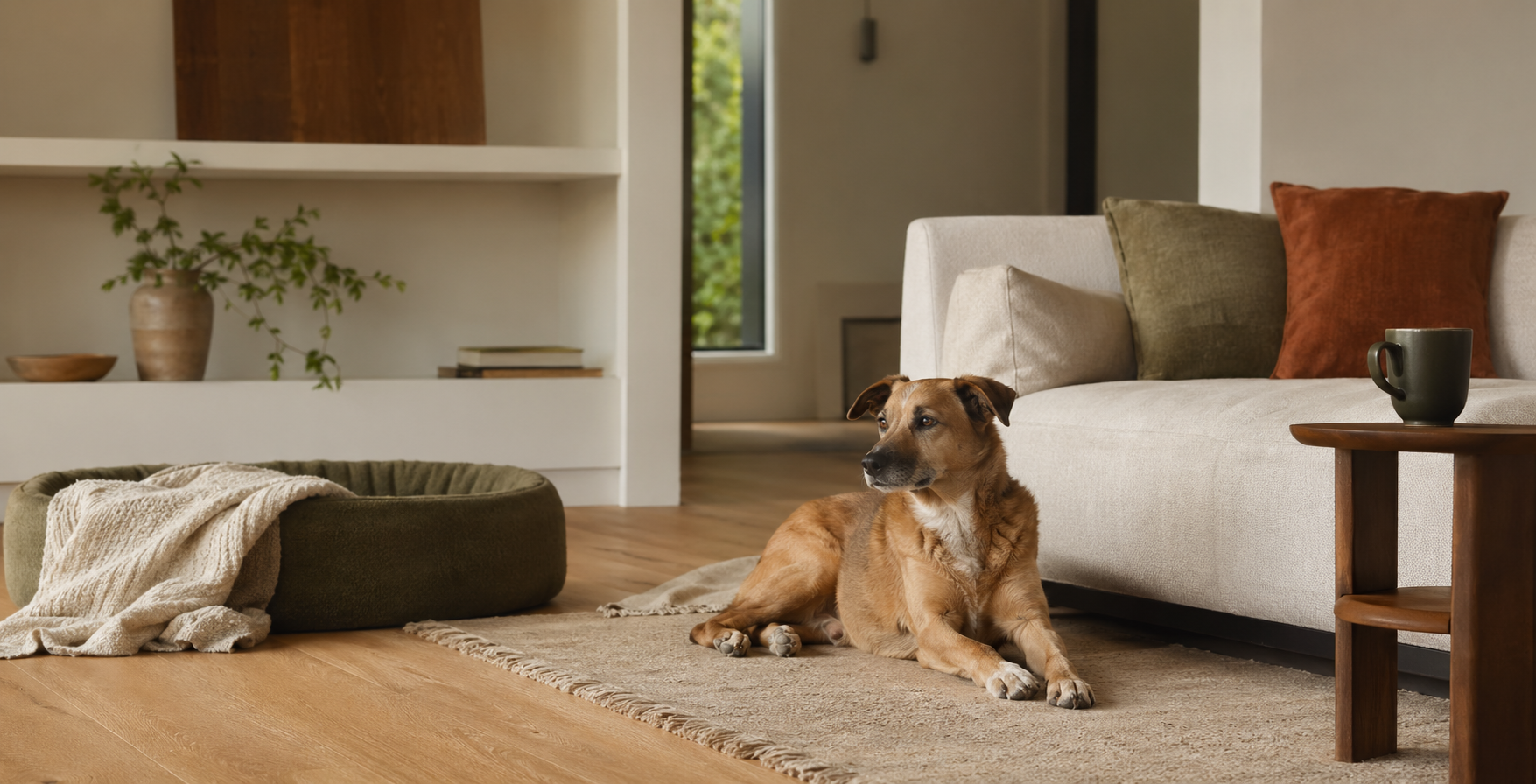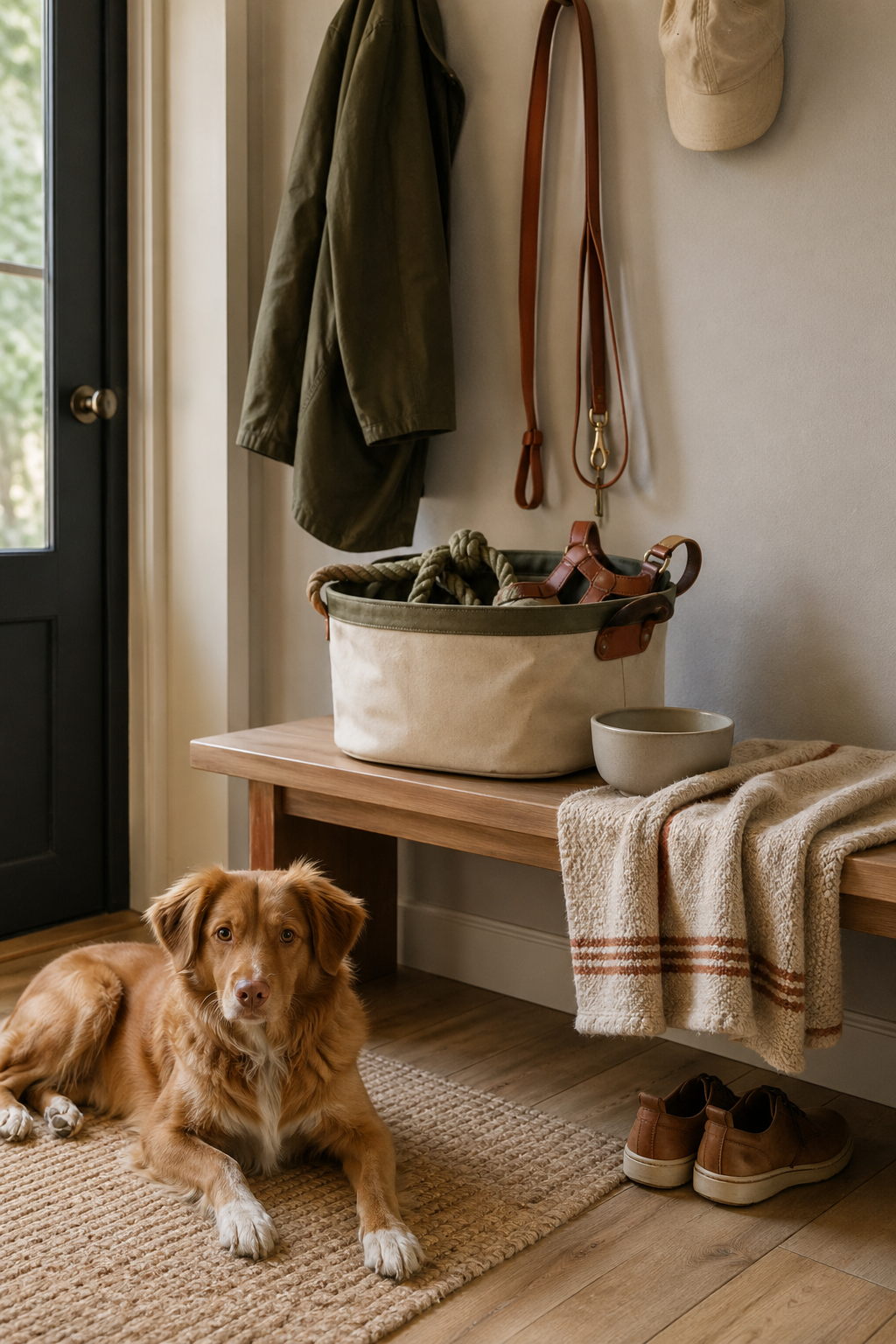
The entryway becomes the dog room whether you planned for it or not. It collects the leash, the towel, the muddy paw moment, the backup poop bags, the emergency lint roller, and whatever else follows you in from the walk.
Build one visible landing zone
The first job is containment. One hook, one bin, one basket, and one place for the towel. If the essentials do not have a clear home, they spread into every nearby surface.
A good entryway setup does not need many parts. It needs a narrow set of parts that you will actually use when you are tired, late, or dealing with a wet dog.
Layer for cleanup before you need it
The strongest rescue-ready homes do not react to mess; they pre-stage for it. That means a towel that already lives by the door, a washable mat that can take grit, and a small basket that can hold the backup supplies without looking like utility overflow.
For many homes, the best upgrade is not more dog gear. It is simply a more honest floor layer and a better place to stash the everyday tools.
Store duplicates where friction is highest
If the only poop bags live three rooms away, the system will break. If the lint brush is upstairs, it will not get used when you are heading out the door in dark clothing.
Good dog-home systems put the duplicates exactly where the friction happens.
What not to overbuy in week one
The first week with a new dog makes people want to solve every future problem immediately. That usually creates clutter before it creates calm. Start with the pieces that remove friction today. Let the other purchases wait until the actual routine appears.